Two homes rated Outstanding by CQC ★★★★★ 9.7/10 across 340 family reviews Family-run in Cheshire since 2011 Visit any day, 8am–8pm, no appointment
Speak to a home: 01565 741 200
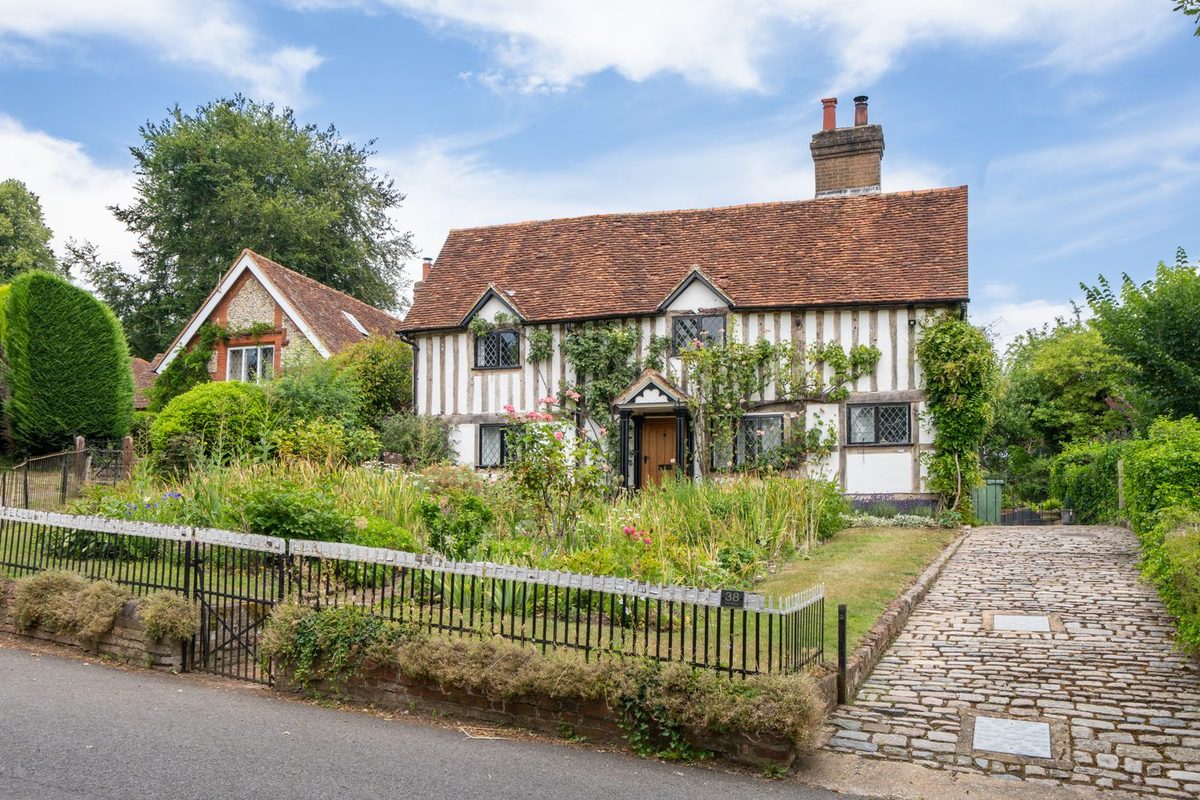
The Wren, a timbered dementia care home in Wilmslow, Cheshire
CQC rated Outstanding Four households of nine residents Zero locked internal doors

There are no locked doors at The Wren. He walks, and the corridor brings him back to his own front door.

The Wren was built in 2018 for one purpose. Thirty-six people live here in four households of nine, each with its own front door, its own kitchen and its own staff who do not rotate between households. The corridors are loops, so walking never ends at a locked door and nobody has to be told to sit down. Two residents out of thirty-six are prescribed an antipsychotic.

9
Residents per household,
and it is never ten
0
Locked internal doors
anywhere in the building
2/36
Residents prescribed an
antipsychotic. Sector average is 1 in 5.
11days
Our fastest admission this year,
from first call to moving in
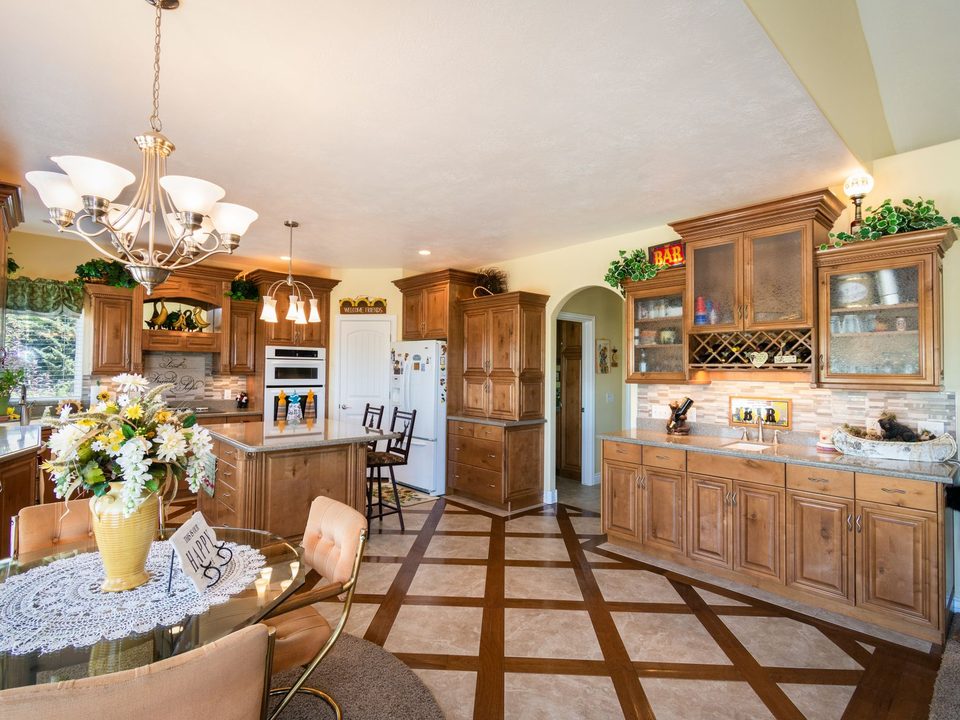
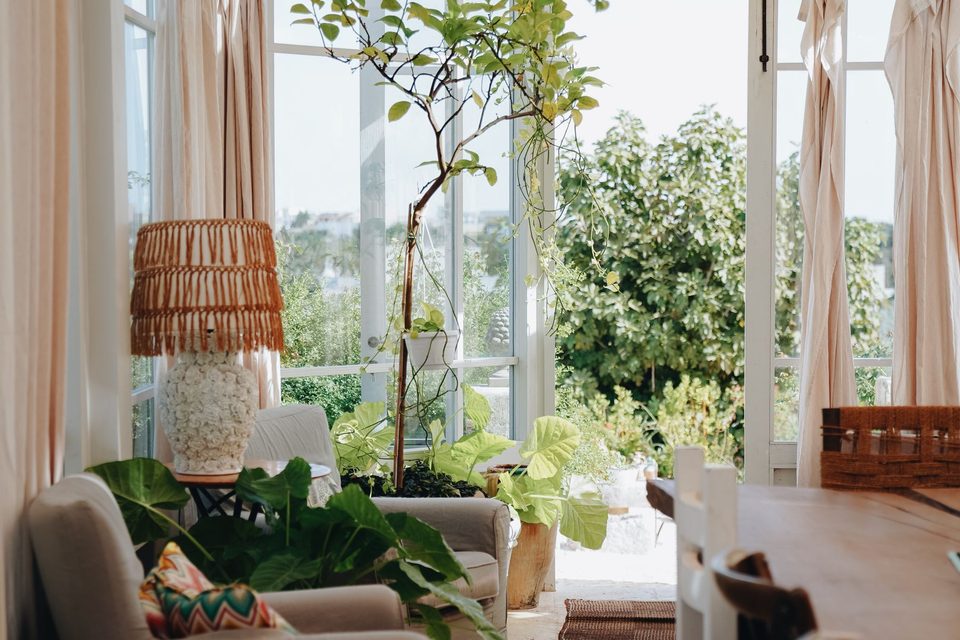
The kitchen inside one of the nine-resident households at The Wren
Every household has this kitchen. It is never locked, the kettle works, and residents use it at three in the morning.

Why nine and not thirty

A person with dementia can hold about nine faces. So we built houses of nine.

Most dementia units in this country are a corridor of twenty-five to forty bedrooms with a lounge at the end. The person living there meets fifteen different staff in a week and cannot hold any of them in memory, so every interaction starts from fear.

The Wren is four separate houses under one roof. Nine residents. The same small team, who do not float between households. Within about three weeks most people stop asking who you are, because you are one of the nine faces they can still hold.

  • Your own front door, with your own door furniture. Families bring the knocker or the number from the house they lived in. It sounds sentimental. It halves the number of people who cannot find their room.
  • The corridor is a loop. Walking is the commonest thing people want to do and the commonest thing homes stop them doing. Here it simply brings you back round to your own door, so nobody needs to be redirected.
  • The kitchen is open. Toast at 2am is not a behaviour that needs managing. It is a person who is hungry at 2am.
  • Staff do not rotate. If you are in Kingfisher, you work in Kingfisher. It makes the rota considerably harder to write and it is the single most important thing we do.

The things we have removed

Six standard practices we do not use

Most of what makes a dementia unit distressing is not cruelty. It is well-meaning practice designed for the convenience of the building. We took these out and the building coped.

Locked internal doors

There is not one, anywhere. The building is secure at its perimeter, which is a garden wall, and inside it a person may go where they like at any hour. Nobody is asked to sit down.

Antipsychotics as a first answer

Two of our thirty-six residents take one, both under a psychiatrist and both reviewed quarterly. Nationally around one in five people with dementia in a care home is prescribed one. Distress is usually pain, or needing the lavatory, or fear.

A timetabled activities programme

There is no whiteboard listing bingo at 2.15. There is a person in each household whose whole job is to notice what one of nine people wants to do in the next twenty minutes, and then to do it with them.

Moving people on when they decline

The Wren is registered for nursing-level dementia care as well as residential, so nobody is moved out because they have deteriorated. People die here, in their own room, with staff they know. Eleven did last year.

Restricted visiting

8am to 8pm every single day, no appointment, no signing in, and after 8pm you ring the household and someone lets you in. During the pandemic we built two garden rooms rather than stop families coming, and we would do it again.

Telling you it is going well when it is not

You get a call when something has gone wrong, the same day, from someone who was there. Not a summary at the next review meeting. Forty-one per cent of the calls families get from The Wren are bad news, and that is the correct proportion.

Updated 8.15am, 22 August 2026

Dementia rooms, priced individually, today

Dementia care costs more than residential care because the staffing ratio is higher — one carer to four residents by day and one to eight awake at night. That is the whole reason for the difference, and it is the only reason.

Room 3 at The Wren, a ground-floor bedroom in Kingfisher household
Free now

Room 3 · The Wren

Kingfisher household · ground floor · 20 m²

£1,490

a week, inclusive. Dementia care.

  • Own front door onto the loop corridor, own door furniture
  • En-suite wet room with a contrasting-colour lavatory seat
  • Nine residents in the household, never ten
  • Rachel will assess at home or on the ward before we say yes
See Room 3
A sitting area in the Garden Household at Ashcombe House
Free now

Room 4 · Ashcombe House

Garden Household · ground floor · 19 m² · Knutsford

£1,510

a week, inclusive. Dementia care.

  • Sixteen residents rather than nine, in a Georgian house
  • Own door straight into the walled garden, unlocked in daylight
  • Better suited to someone in the earlier years who wants space
  • See Ashcombe House in full
See Room 4
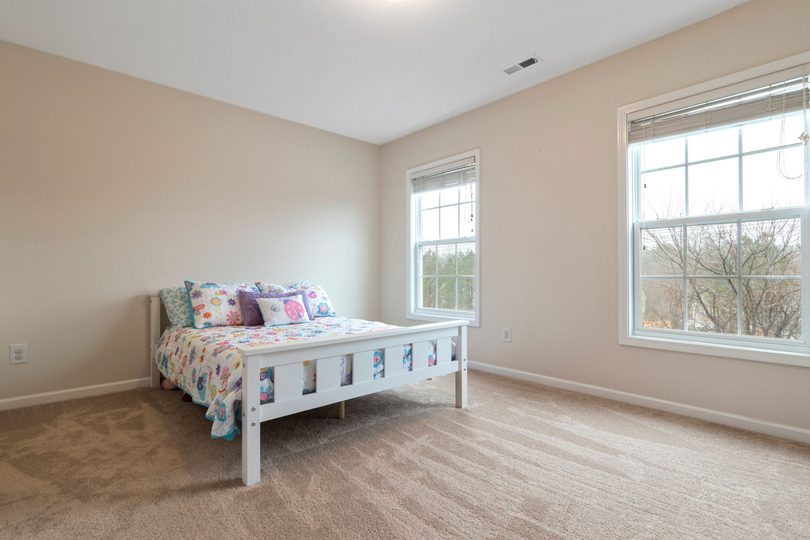
A bedroom window in Wagtail household at The Wren
Expected late September

Room 11 · The Wren

Wagtail household · first floor · 22 m²

£1,490

a week, inclusive. Dementia care.

  • The largest room in the building, two windows, corner position
  • Currently occupied; the family have given notice for 26 September
  • We will not take a deposit to hold it. Nobody should pay for a maybe.
  • Ask Rachel to put you on the list — there are three names on it
Ask about Room 11

Respite and short stays in dementia care are £1,565 a week, minimum one week, in whichever household has a room. It is higher than the permanent fee because a short stay carries the same assessment, the same care planning and the same settling-in work spread over a much shorter period. We would rather say that than pretend it costs the same.

Every dementia fee here is fully inclusive on exactly the same terms as the rest of the group: no third-party top-up, no increase when needs increase, one annual review on 1 April capped at CPI plus two per cent. The full fee table for all three homes is here.

Rachel Okonjo, Head of Dementia Care at CareWhenNeeded
Rachel Okonjo, Head of Dementia Care. Admiral Nurse. Seven years with the group; she designed the household model at The Wren.

The person who decides, and who says no

Rachel assesses every single admission herself, and turns down about one in six

She is an Admiral Nurse — a registered nurse specialising in dementia, of whom there are only a few hundred in the country — and she came to us in 2019 from a memory service in south Manchester. The Wren is, more or less, her building: she drew the household model, she argued for nine rather than twelve, and she lost the argument about the loop corridor twice before she won it.

She will come and see your relative at home, or on the ward, within three working days. That visit is free, it is not a sales visit, and about one time in six it ends with her saying that we are not the right place.

  • She will tell you where else to look. If someone needs a level of nursing or a secure environment we cannot provide, she names two or three homes that can, and she rings them for you.
  • She takes the hard ones. Eleven of the thirty-six people at The Wren were asked to leave somewhere else before they came here. None has been asked to leave here.
  • She runs a free family clinic. First Tuesday of the month, 6pm, in the garden room at The Wren. You do not have to be considering us and most people who come never move in.
  • She is on 01565 741 206. If you are ringing because you have just had a diagnosis and do not know what to do next, that is a perfectly good reason to ring and she will not try to sell you a room.
A daughter sitting with her mother in the garden room
Most families we meet have been managing alone for about eighteen months longer than they should have.

The question nobody wants to ask out loud

How do you know it is time?

You almost certainly will not get a clear signal. What happens instead is that the ground moves slowly enough that you adjust to it, and one day you realise you have not slept properly since the spring. These are the things families tell us afterwards were the real signs.

  • You have started sleeping with the bedroom door open, or with one ear listening. Almost everyone says this one.
  • There has been a fall. Or there has been a near-fall you have not told anybody about.
  • The person you care for is frightened of you, occasionally, and you are ashamed of the reason.
  • You have stopped going out for longer than two hours.
  • The hospital has used the phrase “we can't discharge home without a package” and there is no package.
  • You are reading this at half past eleven at night, which is when most people read this page.

None of that means the answer is a care home tomorrow. It does mean it is worth an hour with somebody who does this every day. Rachel's clinic is free and she is not on commission.

Kingfisher household, an ordinary Thursday

A day inside a household of nine

There is no timetable, so this is not one. It is what nine people and three staff actually did.

3.40am

Doreen makes toast

She was a night sister at Stepping Hill for thirty-one years and her body still believes it is on nights. In a locked unit this would be recorded as nocturnal wandering. Here it is a woman in her own kitchen making toast, with Steve the night carer having a cup of tea with her.

8.15am

Breakfast, whenever

Four people are up. Five are not. Nobody is woken and nobody is hurried, and breakfast is simply available in the household kitchen until it is not breakfast any more.

10.30am

Bill walks his round

Twelve laps of the loop most mornings, roughly a mile and a half. He was a postman in Handforth for twenty-six years. Nobody redirects him, nobody sits him down, and at the end of it he is tired in the good way and eats a proper lunch.

12.45pm

Lunch at one table, cooked in the household

Not delivered on a trolley from a central kitchen. Cooked forty feet away, so the household smells of it for an hour beforehand, which does more for appetite than any supplement. Nine people, three staff, one table, everyone sitting.

4.20pm

The difficult hour

Late afternoon is when distress peaks, and we staff for it rather than pretending otherwise: an extra carer in every household from three until seven. Usually it is answered with a walk outside, or the washing-up, or the radio, or someone simply sitting down next to you.

9.00pm

Two staff awake, in the household, all night

Not one awake and one sleeping-in, and not shared between households. Two, in Kingfisher, awake, for nine people. It is expensive and it is most of the reason the dementia fee is higher than the residential one.

98 reviews of The Wren · 9.9 out of 10

Families whose relative lives here

Published in full on carehome.co.uk, four-star ones included.

★★★★★
Dad has advanced Alzheimer's and had been asked to leave his previous home after an incident. The Wren took him in eleven days. There are no locked doors, so he walks — which is what he wants to do — and the corridor brings him back to his own front door. He has not been sedated once in two years. I did not think this existed.
Simon Whitworth Son · The Wren · April 2026
★★★★★
I asked Rachel at the assessment what she would do if Mum became aggressive, because that is what the last place said they couldn't manage. She said “I'd want to know what she was frightened of.” That was the entire answer and it turned out to be right — it was her hip, and nobody had checked. She has been settled for nine months.
Fiona Bassett Daughter · The Wren · May 2026
★★★★
The care could not be faulted and the household of nine is exactly as described. My reservation is the building itself — it was built in 2018 and it looks it. If you are hoping for something with the character of their Knutsford house, this is not that; it is a very well-designed modern building that happens to be beige. That mattered to my mother more than it did to me.
Graham Petrie Son · The Wren · January 2026

Free · 18 pages · no salesperson will ring

The Dementia Moving Day Guide

What to pack and what absolutely not to. Why the first fortnight nearly always looks like a mistake and what happens in the third week. How to answer “when am I going home?” without lying and without breaking the person's heart. And the eleven questions to ask any dementia unit, including the two that most of them cannot answer.

Written by Rachel Okonjo, Admiral Nurse. Given out by the memory service at two Cheshire GP practices.

One email with the PDF attached. No follow-up sequence, no phone call, and you're not added to anything.

On its way

Check your inbox in the next minute or two. If it isn't there, it's in the junk folder — that happens with PDFs.

Asked at almost every assessment

Straight answers about dementia care

The building is secure at its boundary rather than at every internal door. The garden wall and the front door are the only secured points; inside that, thirty-six people move freely between four households, the garden and the loop corridor, at any hour.

That is not a softer form of security, it is a different one. Every resident wears a discreet door sensor if their assessment calls for it, the perimeter gates are alarmed, and staffing at night is two awake in each household rather than a floating pair. What it removes is the thing that causes the most distress in a conventional unit: repeatedly meeting a door you cannot open.

From £1,490 a week at The Wren and £1,510 at Ashcombe, fully inclusive. Respite is £1,565.

The difference against residential care, which starts at £1,340, is staffing and only staffing. Dementia care here runs at one carer to four residents by day and one to eight awake overnight, against roughly one to seven and a sleeping night carer in residential. That is a real cost and we would rather show you the arithmetic than pretend the two services are the same.

What the fee does not do is rise as the dementia advances. That is the point at which most homes re-band a resident upward, and it is the single most common thing families are caught out by.

No. The Wren is registered for nursing as well as residential dementia care, so we do not need to move anyone on as they decline, and we have never done so. Eleven of our current thirty-six residents were asked to leave somewhere else before coming here.

People die at The Wren, in their own room, with staff who know them. Eleven did last year, and our district nursing and hospice colleagues are in the building most weeks. If your relative would rather die in hospital, we will arrange that instead, but nobody is moved out for our convenience.

Rachel will assess within three working days, at home or on a ward, at no charge. If we say yes and a room is free, the fastest we have done this year is eleven days from first phone call to moving in, and a fortnight is typical.

For a hospital discharge we can move considerably faster, and we hold a same-week line for the discharge teams at Wythenshawe and Macclesfield. Ring 01565 741 206 and say you are a discharge co-ordinator; it goes straight to Rachel or the duty manager.

Visit. The advice to stay away for two weeks is still given by a lot of homes and there is very little evidence for it. What there is evidence for is that the fortnight after a move is frightening, and a familiar face is the thing that helps.

What we will ask is that you come at a time of day that is good for your relative rather than good for the traffic, and that you let us tell you honestly how the first week went, including the parts you will not enjoy hearing. Almost every family finds weeks one and two look like a catastrophic mistake and week three does not.

Yes to both. The Wren was inspected in March 2025 and rated Outstanding overall, including Outstanding for safe, which is uncommon in dementia care. The report is on the CQC website under provider 1-1884073.

The rota is on the wall in each household with names and photographs, and you may photograph it. We would encourage you to, and to compare it with what other homes will show you, because the number that matters is how many staff are actually in the household at four in the afternoon rather than how many are employed by the home.

Come and stand in a household of nine.

Half past twelve on a weekday is the honest hour. Stay for lunch at the table, watch what happens at four in the afternoon, and ask any member of staff how long they have worked in that household.

Call us Book a visit